
Faith Is a Two-Way Street: What Emunah Really Means for Your Life
Biblical faith — emunah (אמונה) — is not passive belief. It is active, covenant faithfulness flowing in both directions between God and His people.
Biblical faith — emunah (אמונה) in Hebrew — is not passive belief. It is active, covenant faithfulness flowing in both directions between God and His people. God calls believers to live in such steadfast loyalty to His Word that He, in return, can release His full power and glory through their lives. The just shall live by faith (Habakkuk 2:4) — and that means being someone God can trust.
Most people think faith is a one-way road. You believe in God, you pray, you wait — and He moves. But there is a question buried in Scripture that most of us never sit with long enough to let it change us:
What if God is also waiting to see if He can trust you?
That is not a small question. That is the question that opens up the entire theology of faith — and when you receive the answer, it will not just change your perspective. It will change your life.
From Caterpillar to Butterfly: What Salvation Actually Does
Before we can talk about living by faith, we need to understand what we were before faith found us. The Scripture is clear, and it is not flattering. Romans 3:23 says that everyone has sinned and fallen short of the glory of God. But the Hebrew tradition behind that reality goes even deeper.
In Biblical Hebrew, two words describe the devouring, destructive creature we often associate with plagues: Chaciyl (חָסִיל) — a locust in its wingless, most destructive stage — and Gazam (גָּזָם) — a gnawing locust that shears away everything it touches. Metaphorically, that was us. Devourers. Destroyers. Agents of death, wherever we went.
Sin — hata'ah, avon, pesha in Hebrew — describes missing the mark, a twisted moral condition, and outright rebellion against God. We were not just imperfect. We were, in our natural state, enemies of the very God who made us.
But God, in His love, faithfulness, and fidelity, sent something no one could manufacture: new blood. The blood of His Son. Blood that cleans from the inside out. Blood that does not just forgive — it transforms. And here is what that transformation looks like:
Where we were caterpillars — devouring, destroying, bringing death — we become butterflies. Pollinators. Life-bringers. Agents of Eden. Beautiful, peaceful, majestic. That is not poetry for poetry's sake. That is the theology of the new creation in Christ. One blood. One sacrifice. One new species.

The Power No One Can Take From You
Here is one of the most staggering truths in all of Scripture, and most believers walk right past it without stopping. John 1:12 tells us that to those who received Him — to those who accepted Jesus Christ — He gave the power to become children of God.
Not the invitation. Not the opportunity. The power. And that power has been released. God is not gatekeeping it, choosing some and rejecting others. He cannot — and will not — discriminate, because He already made His move. He placed the key in your hand. The question is whether you will use it.
You receive that power by one act: accepting the sacrifice of Jesus Christ. Receiving His blood. Saying, "I receive this. I accept this gift." That is it. That is the simplicity of salvation. And once you receive it, you are no longer a child of iniquity. You are a child of God.
That changes everything about how you are supposed to live. Which brings us to Habakkuk 2:4 — the verse that holds the key to why so many believers are not experiencing the fullness of what God promised them:
The just shall live by faith. — Habakkuk 2:4, NKJV
Five words. A lifetime of revelation.
What Is Emunah? The Hebrew Word That Rewrites Everything
When the Bible says "faith," most of us picture belief. Mental agreement. Intellectual trust. We picture someone looking up at the sky and saying, "I believe God can do this."
But the Hebrew word is emunah (אמונה), and it is not primarily about what you believe in your mind. It is about how you live — consistently, habitually, covenantally.
When the Lord Jesus tells His disciples in Mark 11:22 (Orthodox Jewish Bible), "Have emunah in Hashem" — He is not saying, "Believe hard enough." He is saying: Be faithful. Be trustworthy. Be someone God can depend on. That is a different conversation entirely.
Faith Is a Two-Way Street: Can God Trust You?
This is the revelation at the heart of this teaching, and it is worth reading slowly.
God has faith in Himself. He is perfectly faithful, perfectly consistent, perfectly trustworthy. His Word does not fail. His promises do not expire. His covenant does not bend under pressure. We know this. We preach it. We build our hope on it.
But Rebbe Yeshua — the Lord Jesus Christ — said: Everything is possible for those who have emunah (Mark 9:23). Not everything is possible because God is powerful, though He is. Everything is possible when there is mutual faithfulness — when you are as reliable to God as He is to you.
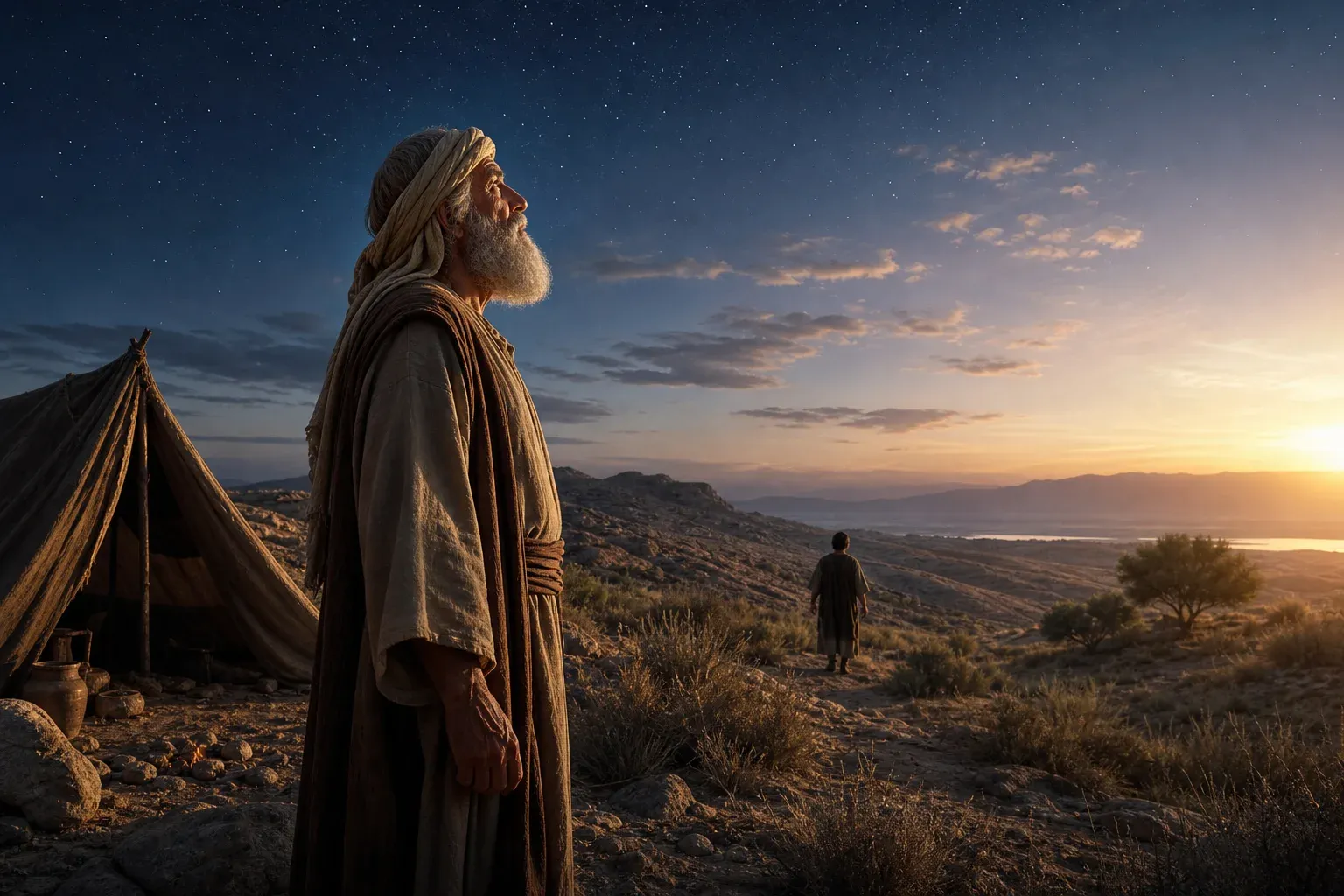
Think about Abraham. God visited him, made a covenant, and promised the impossible: a son from a barren womb. Sarah laughed. Her laugh was honest — these strangers were promising the impossible. And God's response was not a rebuke. It was a question that became Abraham's injection of faith:
Is anything too hard for the Lord? — Genesis 18:14, NIV
Abraham knew the answer. And that knowing — that settled, covenant confidence in who God is — was what made Abraham faithful enough for God to trust him. That is why God could release the promise. That is why, when the moment came, Abraham raised the knife over his son without wavering. God had trusted Abraham, and Abraham had proven he could be trusted.
The same principle governs your life right now. God is not holding out on you. He is watching to see whether He can trust you with what you are asking for.
What Blocks God's Power? The Boged Problem
In Biblical Hebrew, the word boged (בּוֹגֵד) means a traitor — one who acts faithlessly, who breaks covenant, who cannot be trusted. The prophet Isaiah used it to describe Israel's spiritual condition: "The faithless have acted faithlessly" (Isaiah 24:16, ESV). A boged is someone God cannot trust to carry His glory.
Consider what the Bible asks of us. Romans 13:8 says owe no one anything except love. Matthew 5:21 says do not murder — not just physically, but with your words. God calls us to love, not to hate. He calls us to faithfulness in every area of our lives.
Now ask the honest question: In the areas where you are still waiting on God — the marriage, the healing, the provision, the open door — are you faithful to His Word in that area? Is heaven looking at your life and seeing a trustworthy partner? Or is there a pattern of boged — faithlessness — that has built a wall between His promise and your receiving it?
God's glory and power cannot be fully effective in the life of someone He cannot trust. That is not judgment. That is the architecture of covenant.

The David Prayer: How to Find and Fix the Broken Places
When you realize that faithlessness might be blocking what God wants to do in your life, the temptation is to despair. But God has already given you the tool for this moment. It is called repentance.
There is a moment in Mark 9:24 (Orthodox Jewish Bible) where a father comes to Jesus, desperate for his son's healing. Yeshua tells him that everything is possible for those who have emunah. The father's response is one of the most honest confessions in all of Scripture:
Ani maamin! Help my lack of emunah! — Mark 9:24, Orthodox Jewish Bible
He did not pretend. He did not perform. He said: I believe, and I also don't believe. Help me. That prayer — that honest, surrendered cry — moved heaven. And it will move heaven for you too.
David knew this posture. After everything he had seen and done — the victories and the failures — he brought God the most courageous prayer a human being can pray:
God, examine me and know my heart; test me and know my anxious thoughts. See if there is any bad thing in me. Lead me on the road to everlasting life. — Psalm 139:23–24, Expanded Bible
The word heart here is levav (לֵבָב) in Hebrew — the seat of intellect, emotion, will, and moral conscience. David was not asking for a surface scan. He was asking God to go deep. Find where I am unfaithful. Show me where I have become a boged. Correct it. Perfect my faith.

That prayer is available to you right now. Pray it. Sit with it. Let God show you where your emunah is incomplete — and watch Him build it back from the inside out.
The Hannah Principle: When Your Faithfulness Moves Heaven
There is a woman in Scripture whose story captures this entire teaching in one beautiful, aching moment. She could not conceive. She was humiliated. She was hurting. And in her pain, she went to God — not just to ask, but to make a covenant.
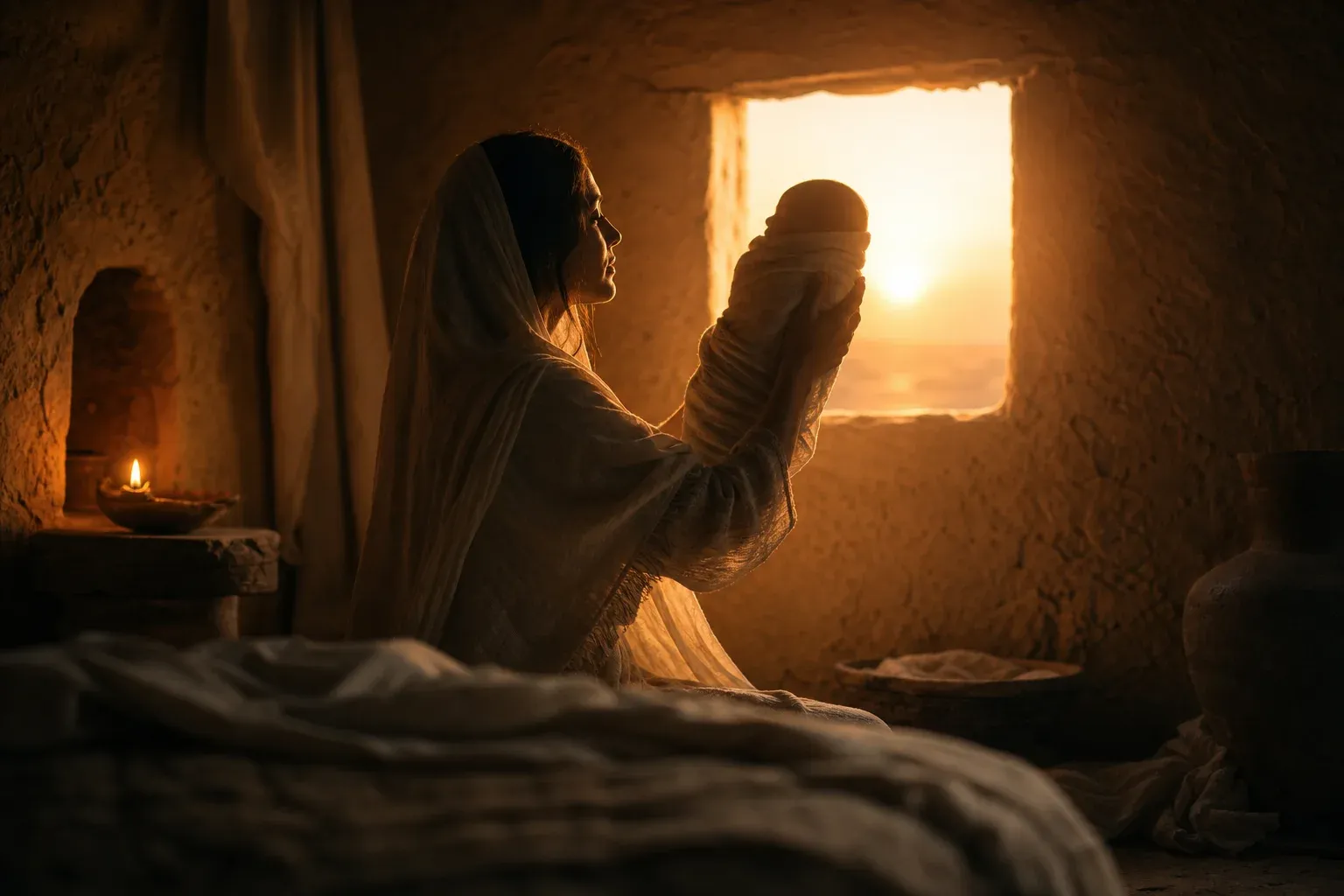
She said to the Lord: Give me this child, and I will give him back to You. I will be faithful to You with this child. She was not bargaining. She was entering into mutual faithfulness. She was saying: I will be a worthy steward of what You release.
God saw her heart — her levav — and He answered. By the next year, Samuel was born. And Samuel became the kingmaker of Israel: the one God sent to anoint David, to replace a corrupt religious system, to reestablish the covenant people on holy ground. One woman's emunah changed the trajectory of a nation.
Your faithfulness is not just about you. What God wants to release through you, when He can trust you, has a reach you cannot yet calculate.
What This Means for Your Life This Week
Faith is not a rare, unpredictable event. It is a way of living. The righteous — the blood-bought, transformed, butterfly-people — live by emunah. Consistently. Habitually. In the small things and the enormous ones.
So here is the question to sit with this week: In the area where you are most desperate for God to move, are you being faithful to everything He has already told you? Not perfectly — none of us are perfect. But consistently? Covenantally?
If there are areas of boged — unfaithfulness — repent. Pray the David prayer. Ask God to search you and show you where your emunah is broken. Then do the next faithful thing, and the next, and the next.
From faith to faith (Romans 1:17) — that is how it grows. Not by a single moment of belief, but by a life of steadfast, covenant faithfulness. That is what moves mountains. That is what moves God.
You were not saved to stay small. You were not transformed from caterpillar to butterfly to remain earthbound. Your emunah — lived out, sustained, growing — is the thing that will make your testimony mesmerize people. Not because of what you did, but because of what God released through someone He could trust.
Be faithful. And watch heaven move.
Closing Prayer
Father, we pray that in every area of our lives, we are faithful — the same way You see it, the same way You want it. Search us. See where we are missing it. Where we are unfaithful, correct us. Perfect Your faith in us. Make us full of emunah. We receive the power You have given us to become Your children — and we choose to live like it. Thank You, Father. Thank You, Holy Spirit. Thank You, Lord Jesus. In Your Name, Amen.
Frequently Asked Questions
What does emunah mean in the Bible?
Emunah (אמונה) is the Hebrew word most often translated as "faith" in the Old Testament, but its meaning goes far beyond intellectual belief. It means faithfulness, steadfastness, and covenant loyalty. It describes a person who is reliable, consistent, and trustworthy in their relationship with God — not just someone who believes the right things, but someone who lives them.
Is faith really a two-way relationship with God?
Yes. Scripture consistently portrays faith as a covenant dynamic — not a one-way transaction. God is perfectly faithful, and He calls His people to mirror that faithfulness. Mark 11:22 (OJB) records Yeshua saying, "Have emunah in Hashem" — which means, be faithfully trustworthy toward God. When you are faithful to His Word, He can release His full power on your behalf.
What is a boged, and how do I know if I am one?
Boged (בּוֹגֵד) means a traitor or covenant-breaker in Biblical Hebrew. It describes someone who consistently acts against the commitments of their relationship with God. You may recognize this pattern in areas of your life where you know what God has said — about debt, love, integrity, or other commands — and you are not living by it. This is where faith becomes ineffective, not because God is withholding, but because mutual trust has been broken.
How do I grow in faith according to the Bible?
The Scripture describes growth in faith as a progressive journey: 'from faith to faith' (Romans 1:17). It begins with identifying and repenting of unfaithfulness in your specific areas of struggle, praying the David prayer from Psalm 139:23–24, and then making daily, covenant choices that align with God's Word. Faith grows through practice, not just prayer. Every act of obedience builds your emunah.
What does it mean to 'seek first the Kingdom of God'?
Jesus teaches in Matthew 6:33 that seeking the Kingdom first — prioritizing faithfulness to God's ways above personal goals — is the condition under which everything else is added. This is the emunah lifestyle in practice. When you are faithful to God's principles, you are no longer chasing what you need. It is already being prepared for you.
Continue Reading
You Might Also Enjoy
 Soul Health
 Polished Outside, Dying Inside: The Soul Truth That Changes Everything
Your life may look perfect — but if your soul is running on empty, nothing else matters. Discover the one repair Jesus offers that reaches deeper than anything else can.
The Power of Consistent Prayer
Why showing up daily in prayer — even when it feels mundane — is one of the most powerful spiritual disciplines a believer can cultivate.
Finding Rest in a Restless World
In an age of constant noise and hustle, Scripture offers a different path — sacred rest and intentional stillness before God.